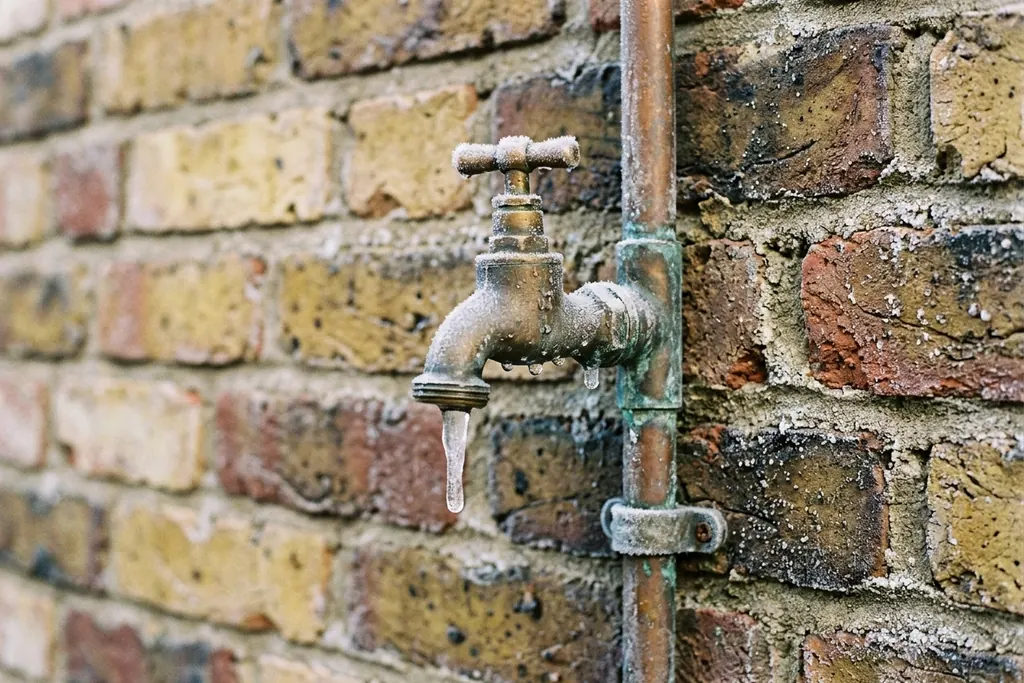
It's below freezing, you turn on the tap, and nothing comes out. Or the boiler shows a fault and the heating won't start. In a cold snap, frozen pipes are one of the most common calls we get.
Signs of a frozen pipe
- No water from one tap, or from all of them
- A pipe with frost on it, or one that feels icy
- The toilet won't refill
- The boiler shows a fault code and makes a gurgling noise (often a frozen condensate pipe)
How to thaw a frozen pipe safely
- Turn off the stopcock in case the pipe has split. You don't want water pouring out when it thaws.
- Open the tap the pipe feeds, so water can escape as it melts.
- Warm the pipe gently, starting at the tap end: a hairdryer on low, a hot water bottle, or towels soaked in warm water.
- Turn the stopcock back on slowly, and check the pipe for leaks.
Frozen condensate pipe
Condensing boilers have a plastic pipe that runs outside to a drain. In freezing weather it can freeze, and the boiler stops. Find where the pipe goes outside, pour warm (not boiling) water along it, then reset the boiler.
How to stop pipes freezing
- Lag pipes and tanks in lofts, garages and outside walls with foam insulation
- Keep the heating on low if you go away in winter
- Fix dripping taps, which can freeze and block a pipe
- Know where your stopcock is, and check it turns
If a pipe has burst, see burst pipe repair and call us.
Common questions
How do I know if my pipes are frozen?
No water from a tap, a toilet that won't refill, or a pipe with frost on it. A boiler fault in freezing weather is often a frozen condensate pipe.
How do I thaw a frozen condensate pipe?
Pour warm (not boiling) water along the plastic pipe outside where it's frozen, then reset the boiler.
Will a frozen pipe burst?
It can. Water expands as it freezes and can split the pipe. Turn off the stopcock before thawing, so a split pipe doesn't flood when it melts.